
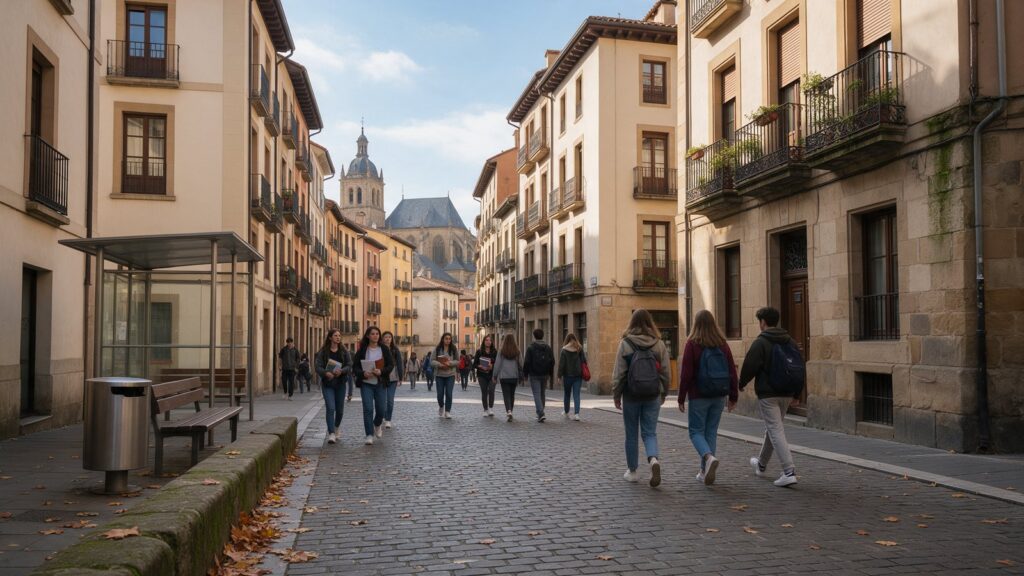
Studying in Pamplona means moving to a mid-sized city with two leading universities in Navarra, cold winters and a student scene centred on the old town. If it is your first time living away from home, it pays to sort out three things early: where you will live, how much a month will cost and how you will get around. This guide brings together official data and indicative figures on universities, neighbourhoods, budget, transport, weather and paperwork, including Camplus’s two residences in the city, so you can plan your first year calmly.
Study in Pamplona: the city and its universities
Pamplona is the capital of Navarra, and many journeys here are made on foot or by villavesa (Pamplona’s urban bus). The centre brings together shops, services and leisure, and the city is known for its pintxos and the San Fermín festival. Camplus describes it as a dynamic, well-connected setting full of opportunities for people arriving to study.
University of Navarra (UNAV)
This is a private university with a campus in Pamplona (Campus Universitario, 31009) and a broad range of degrees in areas such as health, communication, law and architecture. Each faculty has its own address: the Faculty of Science, for example, is at calle Irunlarrea, 1. Always check the building for your degree before looking for accommodation.
Public University of Navarra (UPNA)
The UPNA is Navarra’s public university. In Pamplona it has two campuses: Arrosadia (Arrosadia s/n, 31006), home to most of the faculties and schools, and the Health campus (avenida de Barañáin), with the Medicine and Nursing degrees. It also has a campus in Tudela.
Other options
Besides the two universities, there are higher-education courses such as the design programmes at the Creanavarra School, and the option of distance learning with the UNED, which has an associated centre in Pamplona. If you have a different plan, check on each centre’s website which qualifications are official and where they are taught.
Where to live in Pamplona: neighbourhoods and types of accommodation
Neighbourhoods popular with students
There is no perfect neighbourhood: it depends on your faculty and how you want to get around. These are the areas mentioned most often, and it is worth checking each listing with the villavesa journey planner:
- Casco Antiguo (Old Town): the historic heart, with plenty of atmosphere and everything within walking distance. Check the condition of the flat, the heating and the noise, especially during the fiestas.
- Ensanche: a central area full of services, next to Plaza del Castillo and the Old Town. Camplus La Campana is here.
- Iturrama: an area close to the UNAV campus, popular with those who study there.
- Around the UPNA: Arrosadia and La Milagrosa often come up in searches by students at the Arrosadia campus, and other neighbourhoods are connected by villavesa (line 6, for example, links Rochapea and the UPNA).
- Soto Lezkairu: a recently built neighbourhood with green areas and a quiet setting. Camplus Soto House is here.
Shared flat, student residence or hall of residence
A shared flat gives you independence and can keep the price per room down, but it involves a contract, a deposit, utilities, internet and living with flatmates. The UPNA runs a free university accommodation board, although it warns that it does not verify the listings, so always check the landlord and the contract.
A residence such as those run by Camplus bundles accommodation, common areas, the gym, cleaning, bed linen, internet and utilities into a single fee; meals are chosen separately, and you can also opt for accommodation only. A colegio mayor (university hall of residence) usually offers its own educational programme and more clearly defined house rules.
What to check before you decide
Before signing a contract or booking a room, go through these points:
- What the price includes: utilities, internet, cleaning and bed linen.
- How the heating works and who pays for it in the cold months.
- How long it takes to reach your faculty by villavesa, by bike and on foot.
- What deposit is required and under what conditions it is returned.
- Whether the contract covers the whole academic year or you can leave after one semester.
- Whether you will have a quiet study space and a good wifi connection.
- Who handles breakdowns and how shared living is organised.
How much does it cost to live in Pamplona as a student? Indicative figures
Prices change every year and depending on the area. These figures are indicative: they come from a May 2026 price guide that gathers data from Idealista and Fotocasa, and they are no substitute for current listings.
- Room in a shared flat: between €300 and €450 a month.
- Shared utilities: between €60 and €80, higher in winter because of heating.
- Food: between €260 and €330.
- Urban transport: around €30.
- Leisure: between €80 and €120.
- Estimated total: between €700 and €1,000 a month.
On top of that come the initial costs: when renting, you usually pay the first month plus a deposit, and tuition fees depend on the university, since the UPNA is public and the UNAV is private; check the fees on their websites. To compare with a residence, always ask what the fee includes and check current rates.
To adjust your budget without giving up your social life:
- Compare the total cost (accommodation, food and utilities), not just the price of the room.
- Make the most of the shared kitchen if your residence has one, and batch cook.
- Get the youth villavesa card if you will use public transport every day.
- If you live close to your faculty, consider whether you really need daily transport.
- Set aside a monthly margin for unexpected costs and study materials.
Transport in Pamplona: villavesas, youth card and bike
The villavesa network is the backbone of urban transport and has an official journey planner and app. If you are under 31, the Mancomunidad de la Comarca de Pamplona (the Pamplona regional authority) offers the youth card, which you apply for with your ID and a photo and which is issued free of charge; according to its own website, the 30-day pass pays off if you make more than 28 journeys in 30 consecutive days.
Pamplona also has a municipal electric bike rental service, with a reduced annual fee for under-31s according to the City Council (2023 data), and the universities have bike parking. Routes, timetables and fares change: to find out which villavesa takes you to your faculty from each residence, check the website of the Mancomunidad de la Comarca de Pamplona.
Weather, leisure and San Fermín
Weather: pack warm clothes
According to the AEMET normal values for Pamplona Airport (1981-2010), the average temperature is 5.2 °C in January and 21.2 °C in July. There are about 39 days of frost a year, and it rains at least 1 mm on about 93 days. Bring a warm coat, a waterproof jacket and comfortable shoes, and ask about the heating in any rental.
Leisure and student life
Social life revolves around the city centre, pintxos and the activities organised by universities and residences. At Camplus Soto House, for example, the team organises the Juevintxo Tour of the old town for new residents.
San Fermín
The San Fermín festival runs from 6 to 14 July, with the chupinazo (opening rocket) on the 6th at 12:00, according to the City Council’s official 2026 programme. It usually falls outside term time, but the city fills up with visitors; check your academic calendar and book ahead if your stay includes those dates.
Paperwork and timeline for your first year
These steps help you avoid leaving anything until the last minute:
- Admission and enrolment: check the UPNA or UNAV website for the pre-registration and enrolment deadlines for your degree.
- Scholarships: see the Ministry of Education scholarships portal. The general call usually opens in spring (for the 2026-2027 academic year, from 7 April to 19 May) and includes an amount linked to residence if you need to move home during the course.
- Accommodation: decide whether you want a flat, a residence or a hall of residence, and book as soon as you know where you will study.
- Transport: apply for the youth villavesa card if you are under 31.
- International students: check the visa or stay-permit requirements well in advance with the Spanish consulate and your university’s international office.
- Arrival: travel a few days early to see the campus, try out your commute and buy warm clothes.
Camplus in Pamplona: two student residences
Camplus has two student residences in Pamplona. In both you can choose accommodation only, half board or full board, and the rooms have a private bathroom, a desk and high-speed WiFi.
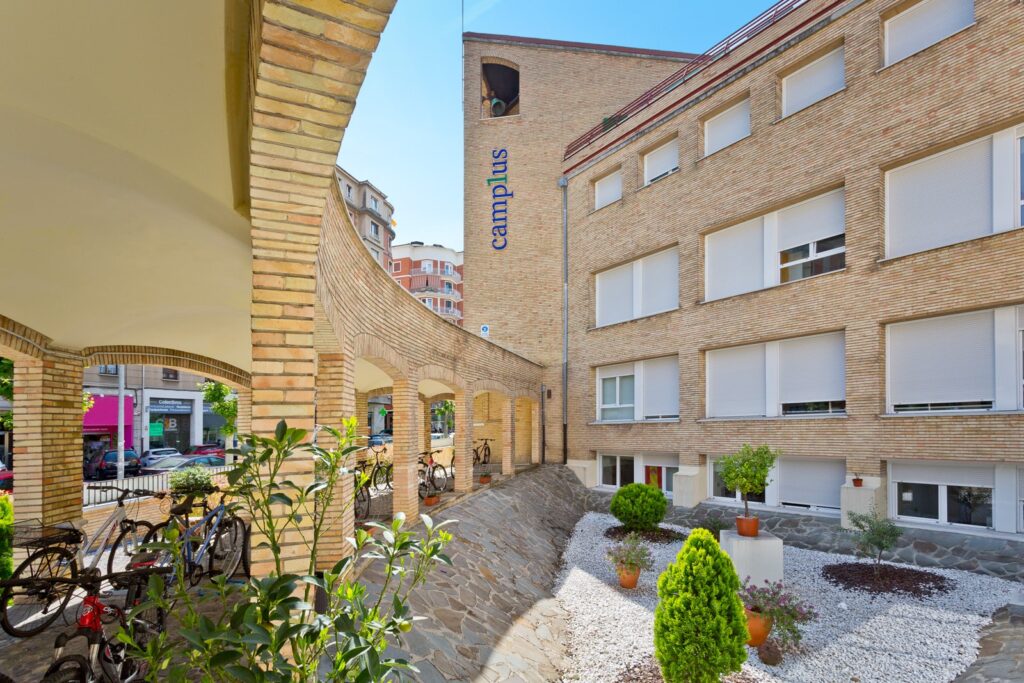
Camplus Pamplona La Campana (Ensanche)
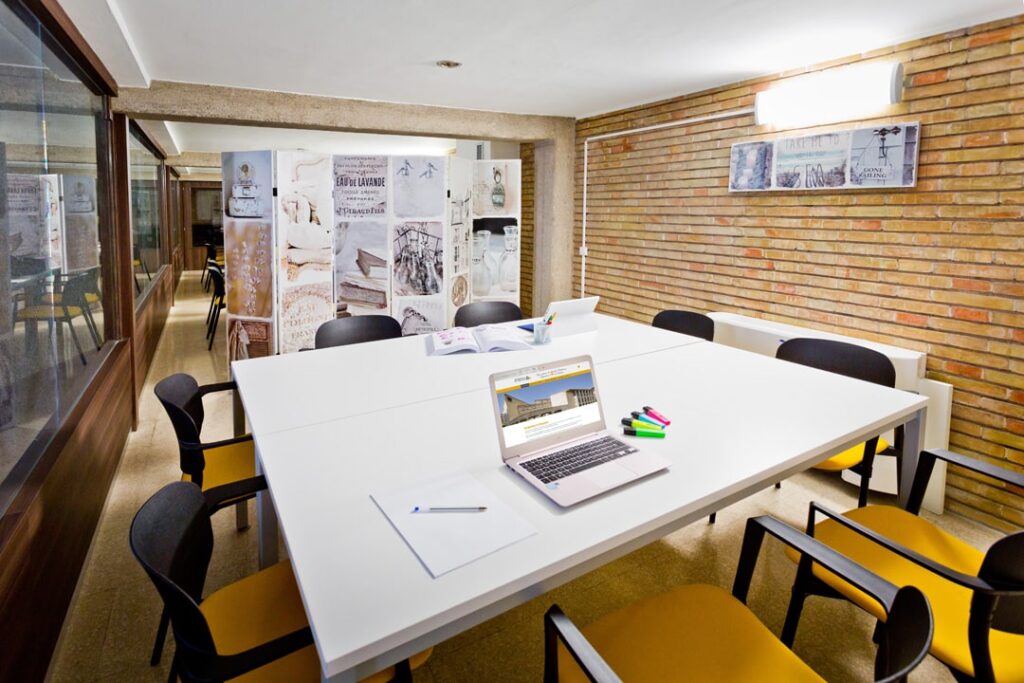
It is at Avenida de Galicia 20, a few minutes’ walk from the centre and between the UNAV and UPNA campuses. It offers single rooms (elemental, standard, premium and superior) and double rooms, a shared kitchen, gym, pool table, sun terrace, library and 24-hour study rooms, a mentoring programme and the Academic Talent and Sports Talent scholarships. Rooms are cleaned once a week.
Camplus Pamplona Soto House (Soto Lezkairu)
Soto House is a newly completed, very modern residence surrounded by green areas, with a gym, study areas and twin, single elemental, standard and premium rooms. Rooms are cleaned every two weeks and, according to its website, the dining room operates from Sunday evening to Friday lunchtime. It also offers a hotel service for short stays.
Frequently asked questions about studying in Pamplona
Is life in Pamplona expensive for a student?
It depends mostly on accommodation. A May 2026 price guide estimates between €700 and €1,000 a month with a shared room, including food, utilities, transport and leisure. These figures are indicative: compare them with current listings and with a residence’s fee.
When should I book accommodation?
As early as possible, especially if you want a specific type of room. With Camplus you can start your booking with your details. At La Campana you will also need to submit a copy of your ID or passport, a recent photo and your proof of admission once you receive it.
Can I stay for just one semester?
Yes. Both Camplus residences in Pamplona accept temporary stays and semesters, with no minimum duration. If your stay is short, mention it when you ask about availability.
Where can your parents stay when they visit?
At La Campana they cannot sleep in your room, but Camplus books them another one, and Soto House also welcomes visits from family and friends.
Is it very cold in Pamplona?
Winters are cold with frequent rain: the average January temperature is around 5 °C and there is frost, according to AEMET normal values. With warm clothes, a waterproof jacket and heating in your accommodation, winter is perfectly manageable.
Start planning your move to study in Pamplona
With your university, neighbourhood and budget sorted, the next step is to secure your accommodation. You can check availability and book your place at La Campana or Soto House, or find out more about the student residence in Pamplona, its rooms and services.

