
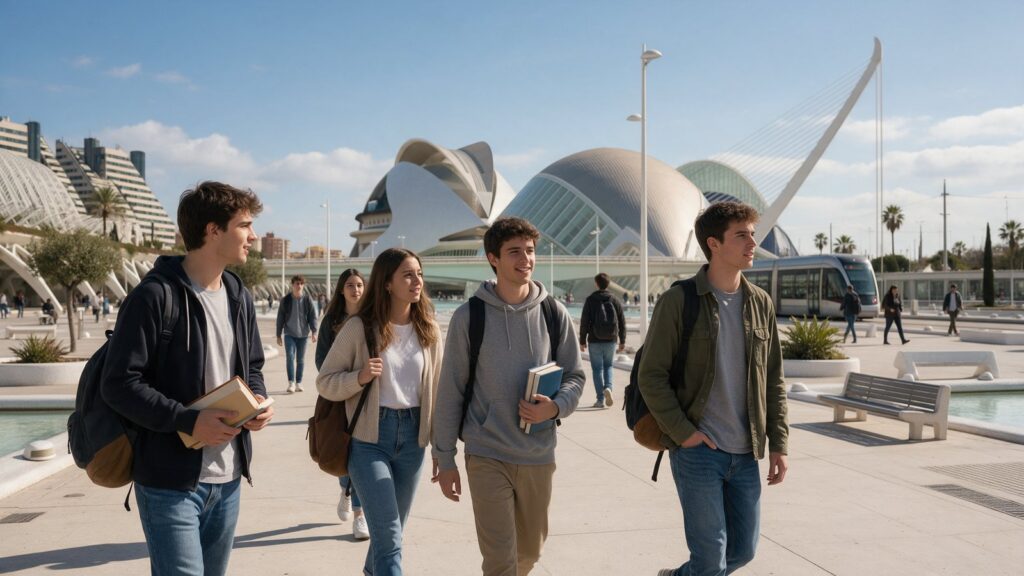
If you are going to study in Valencia, it helps to get to know the city before deciding where to live: which campus is yours, how you will get around every day and which neighbourhoods suit your pace. This guide covers the essentials on universities, transport, leisure, festivals and budget, with facts checked against official sources and a practical checklist for your first weeks in the city. It also explains how student residences in Valencia fit into that routine and what a student residence in Valencia such as Camplus Valencia Tower offers, located in the Burjassot-Paterna university area.
Universities and campuses in Valencia: where you will study
Valencia has two public universities, the Universitat de València (UV) and the Universitat Politècnica de València (UPV), plus several private ones, such as the Universidad Católica de Valencia, the Universidad Europea and CEU Cardenal Herrera. Knowing where your faculty is is the first filter for deciding which part of the city is best for you to live in.
The three campuses of the Universitat de València
According to its official website, the UV spreads its faculties across three campuses:
- Blasco Ibáñez: Medicine and Dentistry, Nursing and Podiatry, Physiotherapy, Psychology and Speech Therapy, Philology, Translation and Communication, Philosophy and Education Sciences, Geography and History, and Physical Activity and Sport Sciences.
- Tarongers: Economics, Law, Social Sciences and Teacher Training.
- Burjassot-Paterna: Mathematics, Physics, Chemistry, Biological Sciences, Pharmacy and Food Sciences, and the School of Engineering.
The Burjassot-Paterna campus is linked to the other campuses by the tram network and has sports facilities and the Sciences library, among other services.
UPV and other universities
The main UPV campus in the city is Vera; the university also has campuses in Alcoy and Gandia, so check which campus your degree is taught at. For private universities, each centre gives its location on its website. Camplus Valencia Tower, for example, is in the Burjassot-Paterna university area and, according to its website, is well connected to the historic centre and to the UPV, the Universidad Europea and CEU Cardenal Herrera.
Getting around Valencia without a car: Metrovalencia, EMT and Valenbisi
Valencia is a flat city and you can live without a car by combining metro, tram, bus and shared bikes. The key is to check your real route between your accommodation and your faculty before deciding, because lines and timetables can change from one academic year to the next.
Metrovalencia and the tram
Metrovalencia, run by FGV, combines metro and tram and links the city centre with the coast and with towns in the metropolitan area such as Burjassot and Paterna. To plan routes, timetables and connections, use the official FGV website or app before you set off, especially on event days or when there are roadworks.
EMT city buses
The EMT is the municipal bus company and complements the metro network in neighbourhoods and on routes the metro does not cover. Check its map and updates on the EMT website, as some routes change during the year.
Valenbisi and cycling
Valenbisi is the public bike-sharing service. In 2023 it had 276 stations and 2,760 bikes available 24 hours a day, according to data published by Valencia Plaza. Given the flat terrain of the city, it is a practical option for short trips. Check the official Valenbisi website for the types of pass and the terms of use.
Transport passes for young people
Transport subsidies change almost every year. In recent years the Generalitat has offered free or discounted passes for young people and, according to the press in June 2026, the Consell extended the fare reductions until 31 December 2026, with a 50% discount on youth tickets. Age, ticket type and deadlines may vary, so check the current conditions with the Autoridad de Transporte Metropolitano de València (Valencia Metropolitan Transport Authority) before you buy.
What to do in Valencia: the Turia, the beaches, the neighbourhoods and Las Fallas
Outside class, the city offers plenty of outdoor activities and neighbourhoods with a character of their own. These are the ones worth keeping on your radar during your first month.
The Turia Gardens, a park for everyday life
The former bed of the Turia river, diverted south after the 1957 floods, is now an urban park of more than nine kilometres that crosses the city from the Parque de Cabecera to the City of Arts and Sciences, according to VisitValencia. It has marked running routes, football and rugby pitches, athletics tracks and skating areas, as well as bike rides away from traffic.
Urban beaches: Cabanyal, Malvarrosa and Patacona
The beaches of Cabanyal, Malvarrosa and Patacona form a coastline of more than three kilometres of sand, with a seafront promenade of about four kilometres for walking, running or cycling. You can get there by public transport, with the Metrovalencia tram and several EMT lines, and they work just as well for a spontaneous afternoon as for a weekend plan.
Neighbourhoods for going out, snacking and living
Each neighbourhood has its own character, and it is worth exploring them before deciding where you will spend your free time:
- Benimaclet: a local-feeling neighbourhood with a student atmosphere, bars, restaurants with varied cuisine and cultural activity.
- Ruzafa: cafés, restaurants, shops and nightlife around its market; it is one of the liveliest neighbourhoods in the city.
- El Carmen: the historic centre, with narrow streets, street art and bars. It gets a lot of tourists, so look for side streets if you want some peace and quiet.
- El Cabanyal: a seafaring neighbourhood between Las Arenas and Malvarrosa, with colourful houses and direct access to the beach.
For culture, Valencia offers the Cathedral, the Silk Exchange (a UNESCO World Heritage Site), the Central Market, the City of Arts and Sciences with its Science Museum and the Oceanogràfic, museums such as the IVAM or the Fine Arts Museum, the Bioparc and the Albufera Natural Park.
Las Fallas: the great festival of March
Las Fallas take place in March, with a calendar running from the 1st to the 19th and a main week between the 15th and the 19th. UNESCO declared them Intangible Cultural Heritage of Humanity in 2016, and on the night of the 19th, the Cremà, the monuments are burned. During those days there are usually road closures, crowds in the centre and changes to public transport, so check the official notices and the academic calendar of your university.
At Camplus Valencia Tower, the Campluslife programme has organised activities during Las Fallas, along with other activities during the year, such as a welcome celebration, a beach afternoon with a picnic and volleyball, or a visit to the Oceanogràfic.
Budget: how to calculate your expenses and compare accommodation
Before setting a monthly budget, work out the total cost of the academic year and not just the price of the room. Four blocks cover almost everything:
- Accommodation: compare what each option includes (electricity, water, gas, internet, cleaning, bed linen and meals).
- Food: supermarket shopping, a set menu at the faculty or the meal service of your accommodation.
- Transport: a transport pass, Valenbisi or both, and trips back to your home city.
- Leisure and materials: books, printing, activities and outings.
Flat rents vary greatly depending on the neighbourhood and the time of year, and the figures on property portals go out of date within a few months, so compare current amounts across several sources. At Camplus, check the up-to-date rates for each room type: utilities and high-speed WiFi are included in the fee.
Shared flat or student residences in Valencia
A shared flat gives you more freedom to choose your neighbourhood and flatmates, but it means handling the contract, utilities, internet, breakdowns and shopping. Student residences in Valencia bring that logistics together in a single fee and add study areas, a gym and activities. Neither option wins in the abstract: it depends on how much time you want to spend running a home and how much you value community life.
Camplus Valencia Tower: living in the Burjassot-Paterna university area
Camplus Valencia Tower is a residence with 342 places located in the Burjassot-Paterna university area, one of the busiest student campuses of the Universitat de València, close to the Universidad Católica. If your faculty is on another campus, check the route with Metrovalencia or the EMT before booking.
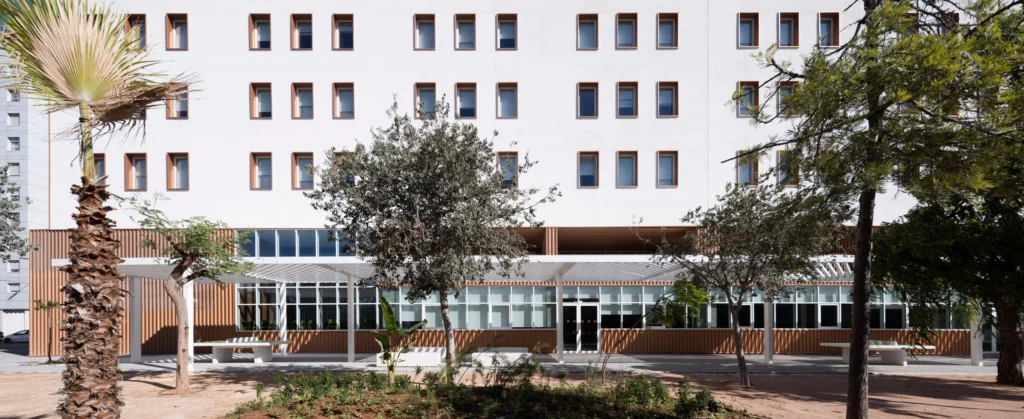
There are four room types (Standard, Premium, Twodio and Double), all with a private bathroom, equipped kitchenette, desk, individual climate control and high-speed WiFi. Utilities are included and the room is cleaned every two weeks, with an optional extra weekly service. The spaces and services of the residence include:
- Study room and teamwork areas.
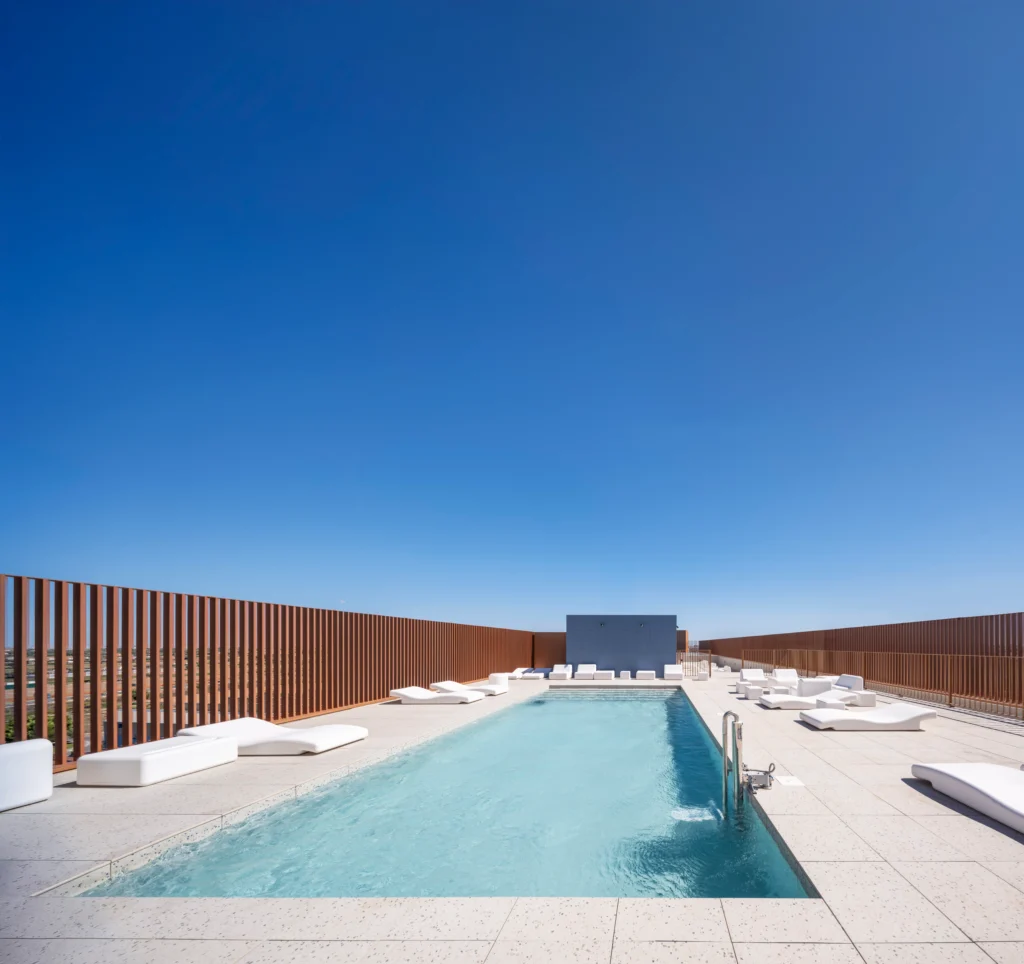
- Leisure room, swimming pool and free gym for residents.
- Dining room with home-style cooking, terraces and outdoor spaces.
- Self-service laundry, car park and bike parking.
- 24-hour reception and CCTV, and parcel collection at reception.
- Adapted rooms.
The meal plan is optional: you can choose accommodation only, half board or full board, for an extra charge, and there is a picnic service for those who cannot make it to the dining room on time. The residence organises leisure and sports activities and has an international atmosphere, which helps you meet people from other degrees and universities.
If your family comes to visit, the Camplus Valencia Tower hotel offers flexible stays, and the residence allows one guest to stay in your room for a limited period. Camplus is part of a network of residences and hotels with more than 35 years of experience in Spain and Italy.
Checklist for your first weeks in Valencia
- Confirm on your university website which campus your first subjects are taught at, and the timetable.
- Try the route between your accommodation and your faculty before classes start.
- Check with the ATMV for the current youth transport pass and apply for the card.
- Download the Metrovalencia and EMT apps to check routes and timetables.
- Find the library, the study room and the sports service on your campus.
- Save 112 (the emergency number across Spain) and the contact details of your residence reception.
- Walk around your neighbourhood and one or two others to decide where you will spend your free time.
- Sign up for the first welcome activity: it is the fastest way to meet people.
Frequently asked questions about university life in Valencia
Can students live without a car in Valencia?
Yes. The city is flat and is covered by the metro, tram, EMT buses and Valenbisi. The only thing to check is the specific route between your accommodation and your faculty, especially if you study on another campus or in the afternoon. Use the official apps to check it and consider a youth pass if you are eligible.
Which UV campus is mine, depending on my degree?
It depends on the faculty. Blasco Ibáñez groups Medicine, Psychology, Philology and Geography and History; Tarongers, Economics and Law; and Burjassot-Paterna, Mathematics, Physics, Chemistry, Biology, Pharmacy and Engineering. Check the exact location of your degree on the university website, because each degree has its own site.
Which neighbourhood is best for a university student?
It depends on your campus and your lifestyle. Benimaclet has a student atmosphere, Ruzafa more food and nightlife, El Carmen is the historic centre and El Cabanyal is right by the beach. If you study in Burjassot-Paterna, a residence in the university area saves you daily commuting and brings the services together in one place.
When should I book a place in a student residence in Valencia?
The sooner the better, because places are limited and availability needs to be confirmed. At Camplus Valencia Tower, after giving your details in the booking form, you must provide your ID or passport, a passport-size photo and your proof of admission once you receive it. If you end up not studying in Valencia, the booking is refunded if you let them know before 31 July and provide your enrolment.
What does the Camplus Valencia Tower fee include?
According to the Camplus website, the monthly fee includes accommodation, use of common areas and the gym, cleaning, bed linen and towels, high-speed internet, 24-hour CCTV, maintenance, participation in the events of the residence and the meal plan you choose: accommodation only, half board or full board. Check the up-to-date rates before deciding.
Next step: choose where to live in Valencia
Studying in Valencia with peace of mind comes down to three decisions: your faculty, how you get around and your accommodation. If you are comparing student residences in Valencia and want to settle the third without dealing with contracts or utilities, get to know the Camplus Valencia Tower student residence and check availability to book your place for the next academic year.

